In April 2020, Emory psychologist Robyn Fivush told the university's news office that when people do not know what to do, they look for stories about how someone else coped. She was talking about a pandemic. The same move happens at a smaller table. A bill comes due, a child asks why the answer is no, and an adult reaches for a story that already has an ending.
That reach is what people mean by mom wisdom. It is rarely a proverb invented on the spot. It is a family story worn down until it fits in one sentence. "Money doesn't grow on trees" is often the short form of a longer memory: a layoff, a repair, a grandparent who kept the envelope of receipts. The sentence survives. The scene is what makes the sentence usable.
What a family story is for
A useful family story does four jobs. It says who was there. It says what they did when something pinched. It says what it cost. And it leaves the listener a choice, instead of a script.
The Hall of Fame is full of the short forms: "You'll understand when you have kids of your own," "Call me when you get there," "You can always come home." Each one is a door into a longer telling. If the short form is all a child ever hears, it sounds like a wall. If the short form comes with one true scene, it sounds like judgment they can borrow.
The glossary calls this kitchen-table wisdom: advice delivered over a meal, passed along because someone needed it once. The name is right only when the story still answers a live question. A story told to win an old argument is a different object. It teaches the listener to duck, not to decide.
What the research can and cannot say
A 2022 review by Alexa Elias and Adam D. Brown, published in Frontiers in Psychology, describes a growing body of work linking knowledge of intergenerational family stories with wellbeing. The authors are plain about the limit: the specific mechanisms are still being worked out, and culture and gender change how stories are told and how tightly those stories track with wellbeing. The paper is not a set of instructions, and it is not a claim that storytelling is care for a mental-health condition. Read it as a map of an association, then come back to your own kitchen.
Fivush and Emory psychologist Marshall Duke spent years on a scale that asks how much children know about their family's history. In the Emory news piece, Fivush describes one study that started just before September 11, 2001, and ran for two years. In that sample — comparable, middle-class, two-parent households, talking with 10- to 12-year-olds — families who spoke in more coherent and emotionally open ways about hard family events had children who, on the study's measures, showed stronger self-esteem, social competence, and friendships, and less anxiety, stress, and parent-reported behavior trouble. That is one study of one kind of family in one window of history. It is a reason to take stories seriously. It is not a promise that a well-told anecdote will produce those results in your house.
If a story in your family is tied to trauma, estrangement, or someone who is not safe to discuss, skip the exercise. Chosen family counts here too. Elias and Brown note that people cut off from biological relatives may draw stories from the people who actually raised them. Belonging is not limited to a birth certificate.
How to tell one story without a lecture
Pick a story you can finish in three minutes. If you need a preface about how hard you had it, the story is still too hot to hand over.
Use this order, out loud, once:
- Name the year or the life stage, even roughly. "The winter your grandfather got laid off" is enough. A fake-precise date helps no one.
- Name the pinch. Money, a move, an illness, a mistake, a kindness that cost something.
- Say what the person did next, including the part that was clumsy.
- Say what you would keep from it, and one part you would not repeat.
Then ask one question and stop. "What would you have done at the door?" is a question. "And that is why you should always..." is a lecture wearing a story's coat.
Children of different ages need different cuts of the same event. Fivush's point in that 2020 interview is that the telling has to be emotionally manageable for the listener. A teenager can hear that a parent was scared and still paid the rent. A younger child may only be ready for "we asked for help, and someone came." You can leave the interest rate out.
Sayings are stories with the scene removed
Open the sayings archive and you will see lines that sound universal because the scene got edited out. "Waste not, want not." "You made your bed, now lie in it." "I'm not your maid." Restoring one scene does not require a genealogy project. It requires one honest sentence: who said it, what had just happened, and whether you still agree.
Try this with a line you repeat and half-regret. Write the scene beside it. If the scene is "I was tired and the living room was a wreck," the line is about a mess, not about the child's character. If the scene is "we did not have a second chance at the grocery money," the line is about a limit. Those are different gifts. The child cannot tell them apart until you put the scene back.
Some lines should be retired when the scene no longer matches the house you live in. "Because I said so" can close a safety question that has already been explained. It should not close a question about a family story the child is old enough to hold. Authority and secrecy are not the same tool.
When to leave the story in the drawer
Three kinds of stories do damage if you drag them out for a lesson.
The first is someone else's private life. A sibling's diagnosis, a neighbor's divorce, a cousin's money trouble — if the person is not in the room and did not offer the story, it is not yours to spend on a moral.
The second is a story whose only point is shame. "We don't end up like your uncle" teaches a child to fear a person, not to practice a skill. If the usable piece is "ask for help before the bill is late," say that piece. Leave the nickname out.
The third is a story you tell so you win. You will feel it in your chest: the pace picks up, the child gets smaller, the ending is always your vindication. Stop at the fact. You can finish another day. The piece on apologies that repair is the companion to this one, because a story used as a weapon needs a repair, not a sequel.
Hard histories are not banned. They need a frame. "This happened. It was not your fault. Here is the part we still do." That frame is different from "smile, it built character."
A week that actually uses the story
Choose one meal or one car ride this week. Tell one story. Ask one question. Write the question down if you tend to keep talking. If the child says nothing, the story can still sit there. Silence is not a failed lesson. It is often the sign that the scene was real enough to need time.
If you want a second pass, connect the story to a visible object: the envelope, the recipe card, the bus pass, the photo on the fridge. Objects keep a story from floating into myth. They also keep you from polishing the past until nobody in it could have been wrong.
The blog index holds the neighboring pieces, including how small conversations carry a story after the formal telling is over. A story told once at a holiday and never mentioned on a Tuesday is a performance. A story that shows up in a short aside — "this is the same kind of choice your aunt had" — becomes judgment.
You do not need a recorded oral history to do this. You need one scene you are willing to tell without sanding off your own mistake.
Which story in your house has become a slogan, and what is the scene you have been leaving out?
Q: Do family stories have to be about hardship to matter? A: No. Fivush's point is that coherent, emotionally open stories help children place themselves in a family, and that includes ordinary coping, not only crisis. A story about how a holiday meal actually got made can carry as much judgment as a story about a scare, if you include what was hard about it and what you would repeat.
Q: What if the children already know the story and roll their eyes? A: Then they know the slogan, not necessarily the scene. Ask them to tell it back, and listen for the part they got wrong or the part they never heard. Correct one fact. Add one cost. Stop. A retelling they own is worth more than a cleaner version from you.
Sources and further reading
- Elias, A., & Brown, A. D. (2022). The role of intergenerational family stories in mental health and wellbeing. Frontiers in Psychology, 13, 927795. A review of associations, not a treatment manual. Mechanisms and the role of culture and gender are still being studied.
- Emory University. (2020, April 29). How family stories help children weather hard times. Robyn Fivush on family reminiscing, including the limits of the 9/11-era study sample.
- This is cultural commentary about family storytelling, not mental-health care. If a story opens old harm, talk with someone qualified to help your specific family.
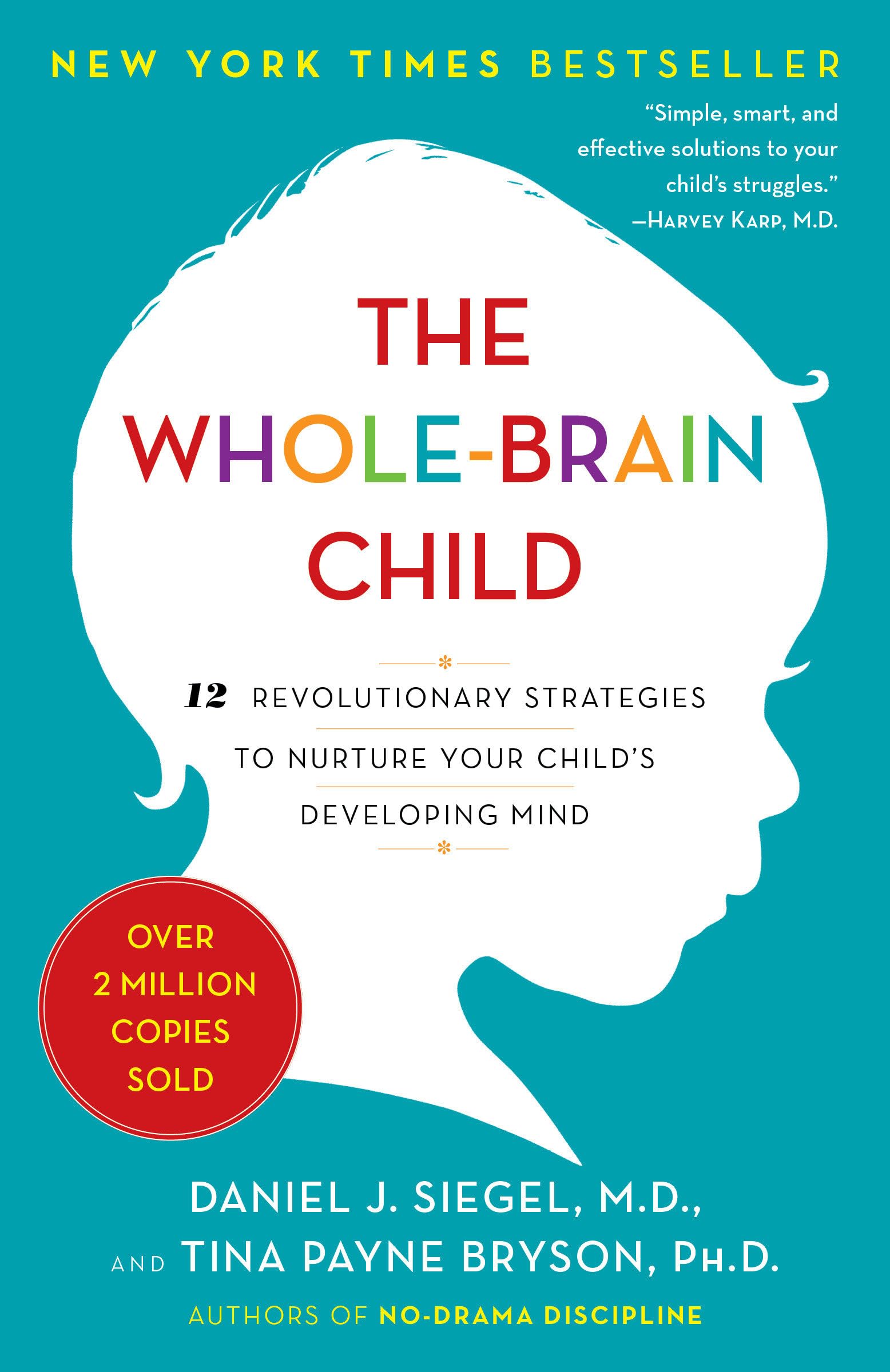 The Whole-Brain Child
 How to Talk So Kids Will Listen & Listen So Kids Will Talk
 Untamed
 The 5 Love Languages of Children
 Expecting Better
 Love You Forever